Showing posts with label Warfare. Show all posts

Tuesday, April 15, 2008

Apparently praising the aesthetic qualities of a battleship is some kind of warmongering.

Y'see, calling an instrument of death beautiful is wrong, at least in the eyes of some Catholics who are qualified to judge morality.


Now, they do have a point. After all, no matter how shiny a garbage truck is, it's still used for carting garbage around - and no matter how beautiful a war machine is, it's designed for killing people, many of whom land in Hell as a result. And a lot of people (most notably those in France, Germany, and the areas between) praised the beauty of their weapons to hide the fact that they were growing too warlike (to use a mild phrase)...


Then again, praising the looks of this weapon...


...doesn't mean you approve of how Francis Macomber died in Hemingway's story.

Saturday, October 20, 2007

In the paleo-future.....

Mark Shea recently wrote an article about old predictions about the future, such as those collected on a blog called Paleo-Future. (Hat tip to Sci-Fi Catholic.)Of course, most of these predictions were wildly inaccurate, although some have come true. (I think here of a Renaissance woodcut that depicted the technology of Utopia, with submarines, "light projected great distances," fire that burns on water, and plants modified to bear larger and tastier fruit.)


Since I have nothing wise or illuminating to say about that, I'll just show you an old prophecy that I came across in the book Misguided Weapons, which quotes at length one Dr. Vannevar Bush.


Dr. Vannevar Bush was head of the Office of Scientific Research and Development during World War II, which was in charge of everything American scientists did for the war effort, from the Manhattan Project to penicillin production. After the war - in September of 1949 to be exact, he wrote a book (Modern Arms and Free Men) on the nature of a future conflict. Of course, this could only refer to a confrontation with the Soviet Union, which by then had its own atomic bombs.

The most notable predictions:

  1. Future navies would operate only against enemy submarines, since they alone would be capable of strategic bombardment. Bombers, missiles, and land-based rockets would be useless because...
  2. Jet aircraft and anti-aircraft guns would make short work of any bomber before it got in range of any important target. Jets, however, would be incapable of dogfighting, since their velocity wide turning radii would leave them at the mercy of more maneuverable propeller aircraft. (Bush apparently believed that speed is a liability in a fighter aircraft.)
  3. As for missiles, their predictable flight paths would make them easy to shoot down.
  4. Rockets (i.e. ballistic missiles) would have a practical range of only 400 miles, and therefore only submarine-mounted rockets would be threats to the U.S. homeland.
  5. Even if rockets were capable of intercontinental flight, they would be impossible to guide, and would miss their targets by hundreds of miles - making them completely useless.
  6. The limited supply of uranium would make it "quite a few years" before the U.S. and the U.S.S.R. had enough bombs to wage an all-out nuclear war. (In 1951, the USSR had 25 bombs, while the U.S. had 438, 268 of which had been built after the Soviet bomb test.)
  7. No totalitarian regime would be capable of producing the sophisticated products which free countries like the U.S. were capable of. (Bush, however, does praise the Nazi-developed V-2, which required "great ingenuity and engineering skill," and which formed the basis for all subsequent rocket science.)

Now, this is the exact opposite of what Paleo-Future is about. Bush is prophesying that various forms of technology would not be used in the future: by 1959 all of his predictions were proved wrong. So spectacularly wrong, in fact, that the author of Misguided Weapons conjectures that Bush was deliberately making false predictions in order to confuse the Soviets. However, Bush may have in fact believed everything he said, in which case a scientist, with access to the most up-to-date information on military technology, and years of experience in military research, was flat-out wrong about everything he expressed an opinion on.

I think you know what that implies.

Sunday, September 2, 2007

31 down, 19 to go

THE BRIDGE OVER THE RIVER KWAI

by Pierre Boulle

(Rating: 4 stars; objectionable material in book: a main character is alcoholic, considerable and diverse violence, censored obscenities and uncensored racial slurs.)

(Important note: the book ends differently from the film The Bridge on the River Kwai.)


Plot Synopsis

“...the combination of individual characteristics which contributed to Colonel Nicholson’s personality (sense of duty, observance of ritual, obsession with discipline, and love of the job well done)...could not be better described than by the single word snobbery.”

The story begins with the British Army Colonel Nicholson’s battalion in captivity in Siam, forced to build a railroad bridge over the Kwai River which separates Malaysia from the rest of Asia. The Japanese need it built within six months so they can continue advancing into the continent. Colonel Saito, the Japanese commander of the project, is overwhelmed by the task. He drinks heavily and abuses the prisoners to relieve his frustration. He thus comes into conflict with Nicholson, who insists upon Saito obeying the Geneva conventions. Nicholson's men take advantage of the conflict to sabotage the construction as much as possible.

Nicholson has no power over Saito, but is a far stronger man. (It's hard to win a battle of wills if you're a alcoholic, I suppose.) Even after vicious beatings, underfeeding, and solitary confinement, Nicholson demands Saito respect his battalion’s rights as POWs. Eventually Saito caves in, and lets Nicholson direct his soldiers’ work. In response, he stops the sabotage and makes his men build the bridge right, making it a masterpiece of its time and place (and more useful to the Japanese – a fact Colonel Nicholson doesn’t mind in the least).

Meanwhile, a three-man sabotage team from the British “Plastics and Destruction Co., Ltd.” (based on "Force 136," the Southeast Asian branch of the British Special Operation Executive) heads out to destroy this bridge. They find the bridge and prepare explosive charges, which they will set off on the day the bridge is opened to traffic. The charges are placed on the piles of the bridge, slightly below water level. The saboteurs put their least experienced member, a young engineer named Joyce, in charge of detonating the main charge. Joyce, who spent his adult life trying to redesign a bridge girder so it would use less metal, loses his mind and becomes obsessed with “DESTRUCTION.”

And then the River Kwai’s water level goes down a couple feet, exposing the charges to view.

MY OPINIONS ON THE BOOK

The Bridge Over the River Kwai is best at suspense. (Which is why my plot synopsis is left incomplete.) The ending of the story is perfectly consistent with the book yet unforeseeable. It is also rather disturbing.

However, the two main characters, Col. Nicholson and Joyce, are a little unbelievable. I doubt there are that many colonels who would switch allegiance, aid in the downfall of their nation’s forces, and deliberately thwart said nation’s military, simply because of their devotion to duty and good workmanship, and I would expect Joyce had something in his life more important than redesigning a bridge girder, something which would have kept him from losing his mind.

Anyway, both Nicholson and Joyce lose their minds, and instead devote themselves to their work – Nicholson to building a good bridge, Joyce to blowing up the bridge. In Joyce’s case it’s a reaction to a feeling of futility (who wants to spend his life redesigning one single kind of bridge girder?) and in Nicholson’s case it’s a desire to make a name for himself. Neither have any other purpose to their work. And therefore they both end badly.

To borrow an idea from EegahInc...

I will end this with a quote from the Catechism.

The sign of man's familiarity with God is that God places him in the garden. There he lives "to till it and keep it". Work is not yet a burden, but rather the collaboration of man and woman with God in perfecting the visible creation.

Follow that and you won't suffer Nicholson's fate. Or Joyce's.

(I promise.)

Wednesday, July 11, 2007

If you're wondering....

I'm having fun this summer, doing a traditional thing - summer school!

Can't go into detail, but this should give you an idea:


An exaggeration, of course...

UPDATE: I had to remove the original clip because of language, so I posted this one. Unfortunately, it's a commercial for a video game. Fortunately, it reflects my experience more accurately.

Saturday, June 23, 2007

I had to do a History test today....

Guess what I was listening to as I wrote on the Monroe Doctrine and the causes of the Civil War?

(sung by Edwin Starr)

War!
-huh-yeah
what is it good for?
absolutely nothing
Say it again

War-I despise
'Cos it means destruction
Of innocent lives

War means tears
To thousands of mothers how
When their sons go off to fight
And lose their lives

I said
War!
-huh
It ain't nothing but a heartbreak
War!
Friend only to the undertaker
It's an enemy of all mankind
the thought of war blows my mind

war has caused unrest within the younger generation (what a sentence for a pop song!)
induction
then destruction,
WHO WANTS TO DIE?

It ain't nothing but a heartbreaker
War!
it got one friend that's the undertaker

War has shattered
Many young men's dreams
made him disabled, bitter, and mean
life is much too short and precious
to spend fighting wars these days

war can't give life, it can only take it away

It ain't nothing but a heartbreaker
War!
Friend only to the undertaker
We've got no place for it today (and still it persists....)

They say we must fight to keep our freedom
But Lord knows there's just got to be a better way

War!
War!
War-Good God, yall
Give it to me, yeah
What is it good for?

(Notes: I really liked the lead-in drum roll! More seriously, this songs, although very good in what it's against, has nothing about what it's for. That's where it messes up. I believe that all organizations based on opposition will fail eventually.)

Sunday, June 17, 2007

Forget Cambodia.....

I feel like invading the whole Middle East.

More practically, it might not hurt to offer refugee visas to any Iraqi Christians who might want it - America is a 99 percent terrorist-free nation.

Saturday, June 9, 2007

Cambodia, Here I come!


I got this "Vietnam Special Forces Weapons Set" on Friday. From top to bottom: 2 'Claymore' antipersonnel mines, a M16/M203 grenade launcher combination; a Remington 870 shotgun; an AK47; a machete; an M79 grenade launcher; a silenced M1911; an Uzi submachine gun; four 'baseball' grenades; two strips of shotgun shells.

Below, Pfc "Stonyface" Roberts poses with them.


And here is S/Sgt. Davis.
and his helmet.

Thursday, June 7, 2007

Wednesday, June 6, 2007

AAAAH! A ROBOT MONSTER!!!


IT'S ZOMBIE-BOT!!!!!!!!!!! WHAT ARE THOSE JAPANESE SCIENTISTS THINKING!!!! DON'T THEY KNOW WHAT HELLISH POWERS THEY ARE ON THE FRINGE OF SUMMONING?????!?!?!?!??!?


I'd prefer a more friendly-looking 'bot. Like maybe...


or...


Maybe I'm carrying my "uncanny valley" hysteria to an extreme.

Let us climb out of the valley and praise this robot.

Monday, June 4, 2007

I fought the SAT...

and the SAT won.


Really, I expect that I did well on the test. Don't know yet, and when I do know, be assured that you won't get any numbers - just vagueness.


I read several books, only two of which I shall review this week: namely, The Bridge over the River Kwai and Heart of Darkness.


Well, see y'all tomorrow!

When I wasn't studying for the SAT, guess what I was doing...;)

Wednesday, May 9, 2007

Robots are a soldier's best friend

At the Yuma Test Grounds in Arizona, the autonomous robot, 5 feet long and
modeled on a stick-insect, strutted out for a live-fire test and worked
beautifully, he says. Every time it found a mine, blew it up and lost a limb, it
picked itself up and readjusted to move forward on its remaining legs,
continuing to clear a path through the minefield. Finally it was down to one
leg. Still, it pulled itself forward. Tilden was ecstatic. The machine was
working splendidly. The human in command of the exercise, however -- an Army
colonel -- blew a fuse. The colonel ordered the test stopped.


Why? asked Tilden. What's wrong?


The colonel just could not stand the pathos of watching the burned, scarred and crippled machine drag itself forward on its last leg.
This test, he charged, was inhumane.


The emotional relationship of man and robot is, I think, rooted in a deep-seated tendency to see personality in non-personal things - trees, wind, streams, etc.


As long as robots aren't considered as human, to be pampered - or tortured - at will, I'm fine.


Concerning the Global Hawk remarks in the article.....


Meet Colette and Grumpy Jim.


Kind of overdid it on the lipstick, yes...


"If my chin was a little lower on my face, fleshbag..."

Tuesday, May 8, 2007

Unfortunately, our enemies are not, as a rule, this dumb

Fortunately, they are this stuck-up.

-

I'm waiting for someone to look at the Middle East and decide "Hey, when do we get to stop recieving attacks from the Imperialist/Jewish/Crusader forces and maybe conquer something?"

-

It will be a while, but eventually it will come, I am certain...

Monday, May 7, 2007

20 down, 30 to go

Militant Tricks

H. John Poole.

Summary:

In Iraq and Afghanistan, Jihadists - primarily at the behest of Iran, although others are in the game as well - are starting a long, drawn-out campaign to regain control of these areas in the name of Allah. By using cheap, marginally trained suicide fighters, they save the lives of skilled instructors/commanders; by targeting the local government, they render America and its plans for the two nations unpopular; by avoiding the full impact of American firepower, they give the illusion of defeat when they really have won.

Or so H. John Poole claimed in 2005, when this book was published. I would say most of his claims seem to have been true, going on my newspaper-based knowledge of the subject. He does support his positions - mainly by quoting news articles and reports on Iraq and Afghanistan. However, the thesis of his book - that the U.S. should retrain its soldiers to fight primarily "guerilla" wars - is probably most important.

Since World War II, the U.S. has become master of "conventional" warfare, where two clearly defined armies get together and pound each other to pieces. As a result, it developed most of its technology to deal with tanks, large masses of soldiers, and aircraft (particularly that of the Soviet Union). However, most of its enemies (the ones it has fought actual battles against) fight "unconventional" warfare. By having a loosely organized military network; using lots of ambushes, infiltration of enemy camps, and attacks with explosives; and keeping as similar as possible to civilians; they often break the laws of war but usually win. Usually what happens is that the side with the bigger guns, bombs, and tanks loses, simply because they couldn't convince the enemy to stop fighting.

The main problems with "unconventional" warfare is that it's encourages chaos and is very gory for the winning side. Thus, it's usually used by people without political authority (the Viet Cong, for instance) and by people with some ideology judged more important than life itself (Communism is a good example). The main advantage is that it's cheap - bombs and RPGs are far cheaper than the aircraft and tanks they destroy.

On one hand, I expect this form of war to go away, since sooner or later its practicioners will want to conquer something instead of 'liberate' themselves from attacks they couldn't stop. On the other hand, why do something complex and expensive when everyone already knows how to defeat it?

Of course, this leaves the question about the U.S. armed forces unanswered. I would say "yes, we should modify our tactics for small wars, like the one in Iraq." After all, we aren't at present fighting anyone near our class, and if they did, they would be too afraid of our using nukes to get much of anywhere.

Did I mention that this book will bore the skull off anyone who isn't really into military science, like me?

Overall score: 4 Stars (I like it, but doubt anyone else will)

Saturday, May 5, 2007

From our house:

Ricky the Horrible with a plastic cup.


The Empire of Dallas is back - and has posted an AFV on the kitchen island.


Mtown commandos attempt to drive them off, without success.

Some mercenaries who came along for the ride here...


Feeding time for the kittens, none of whose names I know.

Monday, April 30, 2007

Check this out.

Of course, anything with "Ride of the" in front gets me thinking of...this...and this...

No. I have not watched Apocalypse Now. I just heard of it while reading about the Cold War, so there...

Tuesday, April 24, 2007

Take my word for it:

Racism is going to make a comeback in this century.

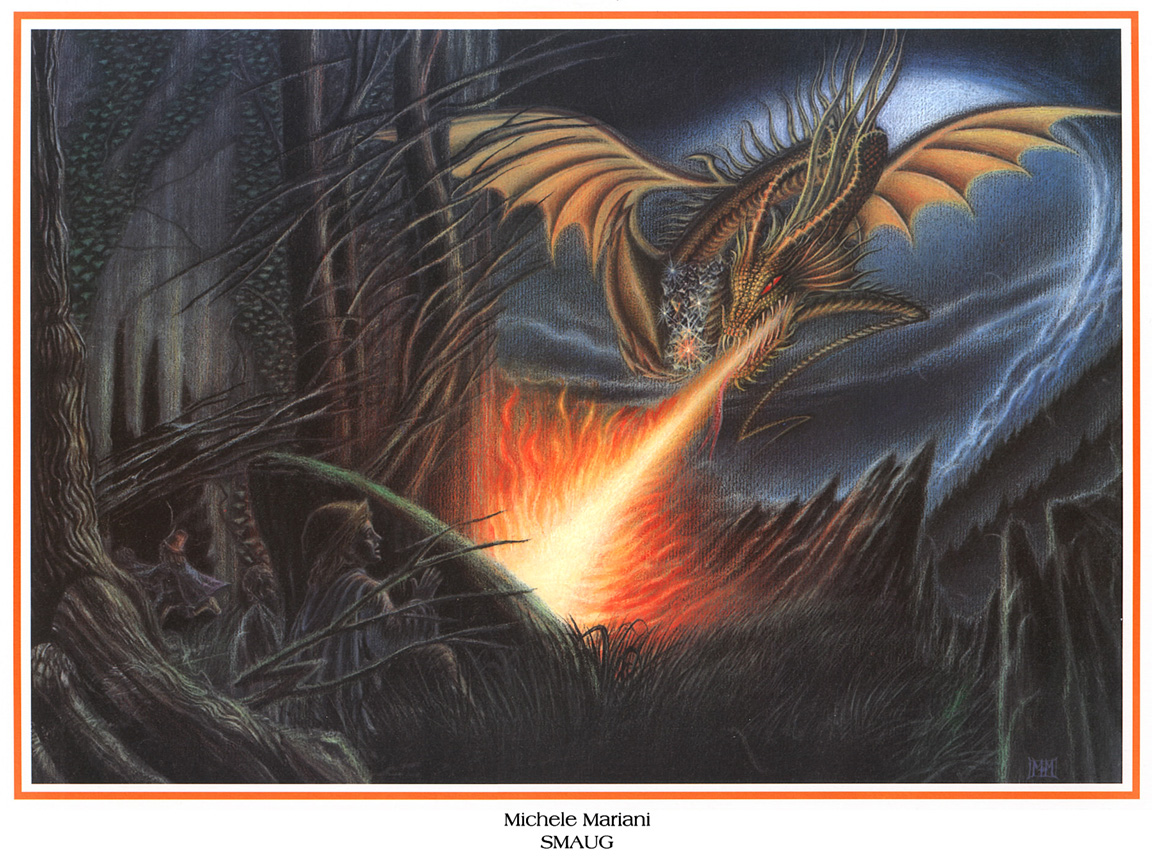
It and Western culture are like Smaug and Peeps in combat.

Like this:

St. George's feast day was just the other day. So don't feel down, folks.

When is St. Bilbo's feastday? Or St. Bard the Bowman's?

Now I'm talking like a real Lord of the Rings nut. Darn.

19 Down, 31 to go

Up Front


Bill Mauldin


Mauldin, an infantry sergeant with the 45th Division of the Army, drew the "Willie and Joe" cartoons for the U.S. Army's official paper, the Stars and Stripes, and Up Front is primarily a collection of these cartoons. However, along with the cartoons is his description of the warfront (primarily Italy) and the context of the cartoons, which are based on his own experiences. He writes well and describes the war vividly.


I had read in a newspaper article that many American soldiers in Iraq are able to play video games in their spare time. At first, I thought this was "soft." I had no right to think so, but I did.

However, Mauldin's lines on drinking in the Army changed my mind. He mentions that soldiers (including himself) tended to drink when they were "homesick or bored," since "other recreational facilities are crowded or unavailable." This was made worse by the lack of a limited liquor ration, which impelled American soldiers to buy lots of low-quality local alcohol. It goes to show a)you shouldn't judge something you don't know well, and b)things do improve over time.

So that's one thing I gained from Up Front.


I rate this a solid 5 stars, not least because his cartoons are well-drawn and humorous.


Just for kicks, I'm posting Mauldin's personal favorite cartoon.


Saturday, April 14, 2007

Those Women!

This post was too sarcastic. It has therefore been censored.

I am sorry for what I wrote here, which was definitely bad even if meant sarcastically.

Wednesday, February 14, 2007

Me and Uncle Sam's Man-Catchers

Being a male American citizen near the age of majority, I get stuff from the various military branches, containing variants on "Join Us and Risk Getting Your Internal Organs Rearranged in Iraq (or Basic Training)!"

Well, one came along from the Marine Corps...and it had a cool poster...and a card you could send for an information packet and a free bag...and it was free...and I had a pen...so...

Anyhow, a package from the Marines arrived just now. Here's the little letter they sent me.

Dear [Histor's real name],

They spelled it right. My name tends to be misspelled. Kudos to the Marines for not misspelling it!

Good News! You'll soon be eligible to apply for enlistment in the Marine Corps.

That just gives me warm fuzzies all over, thinking of the day I leave dadwithnoisykids and set off into the real world, burglars, IRS agents, credit cards, and all.

The fact is, if you have the fortitude, confidence, and will to improve yourself,

Fortitude? Check. Confidence? Seems to be missing. Will to improve myself? Just between you and me, I can't even keep my room clean.

then the Marine Corps may be right for you.

"May be right for you" is one of my least favorite phrases, which include "self-improvement," "lifestyles," and "the problem with your essay, Histor, is..."

Of course, it will not come to you easily.

Probably not. See my comment about my room.

You will work harder than you ever thought possible.

I believe that with my whole heart.

To help you with this decision, I have enclosed a brochure that highlights what it really means to be a Marine.

Haven't looked at it yet, so I can't say.

The best thing you can do right now is stay focused, remain determined and finish school.

Hmmm...who has told me that before?

Becoming a Marine will be the challenge of a lifetime, why not dedicate this next year to making sure that you're ready.

How d'y'all know I've decided to become one?

On the other hand, be assured I did not apply in order to get that bag. Although it's a nice nifty bag indeed.

So, look through this package and consider what it really means to be a Marine.

No doubt the cool bag helps tell me what being a Marine is about. No doubt the package will help me in my decision. However, anything binding will come after I consult a former Marine on the subject.

Then if you think you could be one of us, contact your local Marine Recruiting Substation, which I've listed below for your convenience.

[Address withheld]

Sincerely,

John L. Estrada
Sergeant Major, United States Marine Corps
Sergeant Major of the United States

Thanks, Sir!

(Now, don't take that "sir" as being of any bearing on my opinion of the Marine Corps...it's actually a Southern thing.)

-------------------------------------------------

Now I have examined the package itself: one (1) letter, one (1) brochure on enlisting in the Marines, one (1) medium-sized bag of indeterminate purpose, and one (1) gargantuan poster with cool pictures on it.

The poster is probably not going to go on the wall. Too much up there already. Then again...

SEARCH ME, I DUNNO!

Google
WWW http://est-puzzlementem.blogspot.com
Powered By Blogger